With more than 15 years of operation, the tourist farm Pri Čukovih has established itself as a reliable destination for lovers of homemade cuisine and outdoor activities. Our offer includes a wide selection of traditional dishes prepared according to old recipes. Visitors can indulge in a variety of flavors, from freshly made gnocchi, meat dishes, vegetables, to desserts that we proudly serve. We prepare our dishes as much as possible using our own ingredients.
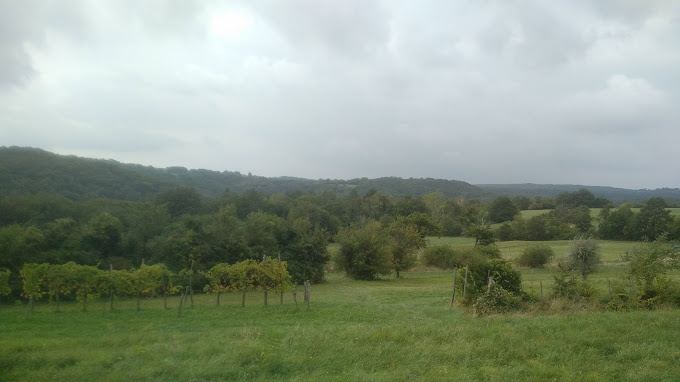
In addition to culinary delights, the tourist farm ‘Pri Čukovih’ also offers a wonderful setting where visitors can enjoy the natural environment, surrounded by green meadows, beautiful views, and fresh air. Here, people can escape the hustle and bustle of the city, relax, and recharge their energy.
Trip ideas
Walk or ride a bike through this beautiful valley
Recreational trail
The trail begins either at the turnoff from the main Kozina–Koper road towards Klanec, or below the village of Nasirec, or below Mihele, depending on how long you wish to walk…
Recreational trail along the route of the abandoned railway in the Glinščica Valley Landscape Park
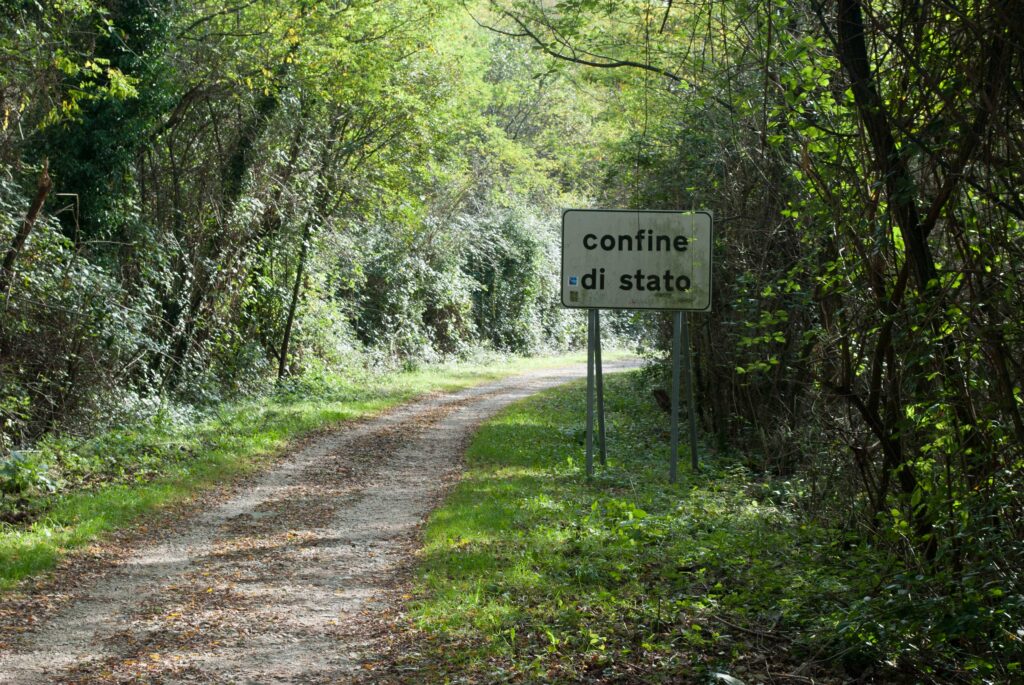
The trail begins either at the turnoff from the main Kozina–Koper road towards Klanec, or below the village of Nasirec, or below Mihele, depending on how long you want to walk. The trail runs through the Glinščica Valley Landscape Park in the Municipality of Hrpelje – Kozina and the neighboring Dolina in Italy.
The picturesque valley and canyon, shaped by the river’s flow, attract many nature lovers, cavers, and climbers. Well-maintained walking and cycling paths, along with other footpaths winding through a diverse landscape with Illyrian, Mediterranean, and Alpine vegetation, lead to caves with ancient inscriptions, springs, and viewpoints offering unique views of the Gulf of Trieste. The 36-meter-high Supet waterfall is especially scenic and sometimes freezes in winter. Remains of a Roman aqueduct, the ruins of Lorencon Castle and Muh’s Castle, as well as old mills and the Church of St. Mary, testify to the rich history of the area. Paths are marked throughout the valley.
Kozina–Trieste cycling route
Near the excursion farm Pri Čukovih (just over 5 minutes away by car) there is a former railway line…
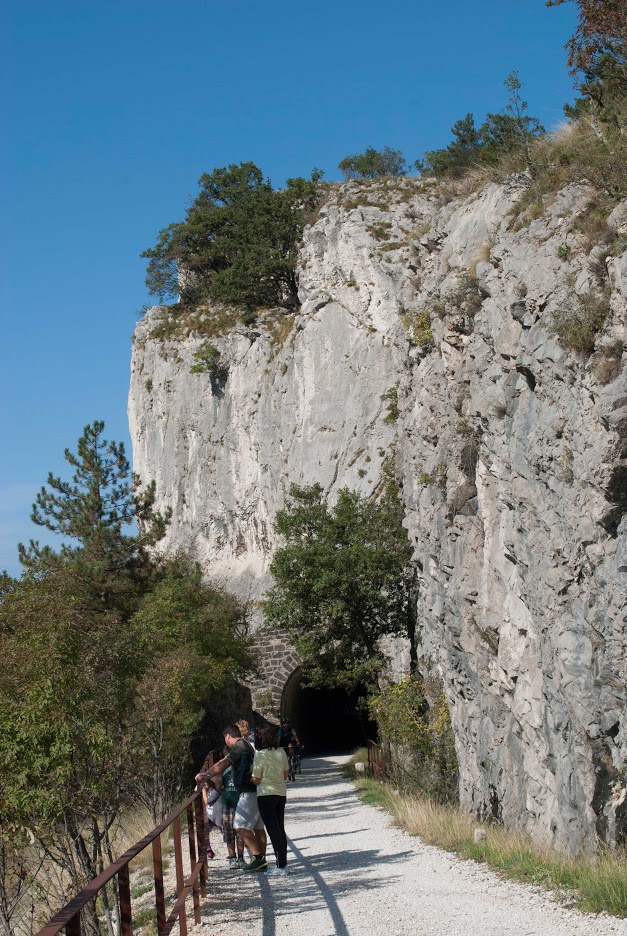
Near the excursion farm Pri Čukovih (just over a 5-minute drive away) is a former railway line that connected Hrpelje and Kozina with Trieste and Pula in the last century. Today, it is used for recreational purposes.
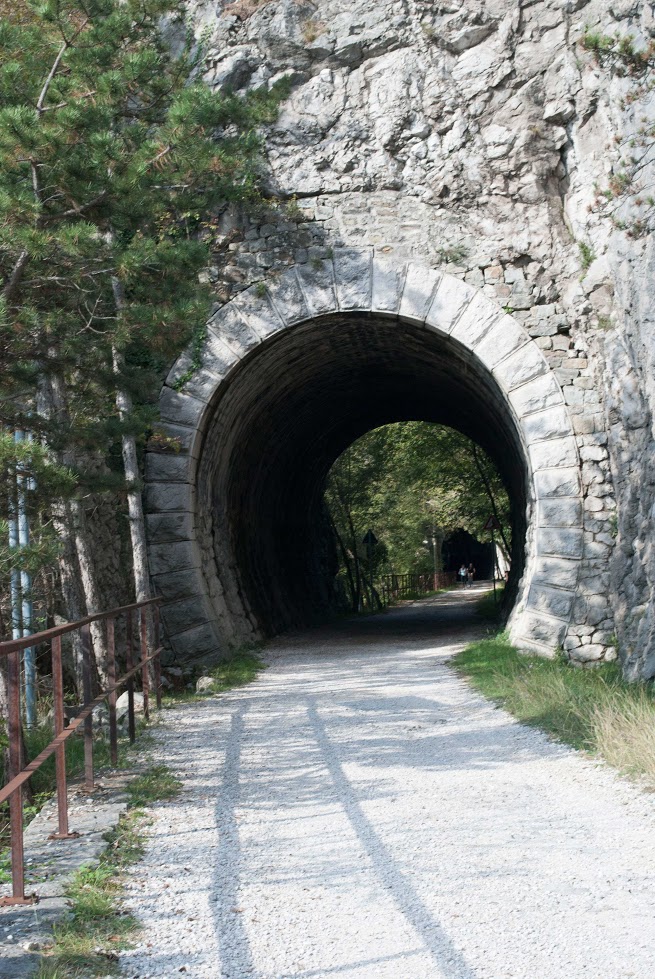
The approximately 19.6 km long route was built in 1887 but was closed by the late 1950s. Locals amusingly called it the ‘Railway of All Saints,’ as every station along the line was named after a saint. In 1966, the last tracks were finally removed, but the route still features thirteen bridges, six viaducts, and five tunnels (the longest being the 224-meter-long Ricmanje Tunnel), making it very attractive for architecture enthusiasts.
The path is interesting for cyclists due to its length, slope, and distance from traffic, and it is also suitable for trekking and other outdoor exercises. You can start at the gas station in Kozina, continue towards the village of Klanec, and then head to the Glinščica Valley Landscape Park. The cycling route ends in Trieste, and on the way back, you can refresh yourself at our excursion farm Pri Čukovih.
Cycling Route
Passage through the tunnel
Glinščica Valley
Rich archaeological sites have confirmed that humans lived in the Glinščica Valley as early as the Neolithic period. The Glinščica Valley is the only natural passage from present-day Slovenia to the sea…
Rich archaeological sites have confirmed that humans lived in the Glinščica Valley as early as the Neolithic period. The Glinščica Valley is the only natural route from present-day Slovenia to the sea across the steep karst slopes. Due to its biodiversity, it was declared a natural reserve in 1996.
The most distinctive feature of the valley is the noticeable sudden transition between continental and Mediterranean climates. Due to different exposure to the sun and the bora wind, there can be more than a 10°C difference at the same altitude, which naturally affects the local vegetation. These unique conditions offer researchers an exceptional opportunity to study various geological phenomena, as well as the local fauna and the mentioned flora.
Besides its natural beauty, the Glinščica Valley also has a rich history. Particularly notable are the horizontal caves on the right side of the valley, known as the ‘Caves with Windows,’ which were very suitable for habitation (due to excellent natural climate control) even in Roman times, though they were mainly used as storage spaces and stables. Over the centuries, several castles and fortresses were built and destroyed in the valley: Muh Castle, Robida Manor (Fünfenberg), Tabor above Botač, and Vikumberg Castle near Beka (archaeological site Lorencon). The small Church of Mary on the Rocks is also linked to history; legend says it was built by Charlemagne because he wanted to be buried there. It is the oldest sanctuary in the valley municipality.
Our excursion farm Pri Čukovih also has a long-standing tradition, with over 10 years of preparing high-quality homemade food in this area.
Excursion Farm
Pri Čukovih
At our farm Pri Čukovih, we believe that good things begin with the land and the people. We have lived and worked here for many years, connected every day with nature, the seasons, and the tradition passed down to us by previous generations. For us, this is not just work, but a way of life.
Most of our food is homegrown. We take care of the garden, the animals, and the ingredients ourselves, which we then prepare with love in our kitchen. When we cook, we do not look for shortcuts – we follow the recipes we inherited and the methods that preserve the authentic taste of homemade food, just as our mothers and grandmothers used to cook.
Quality means the most to us. We know where every ingredient comes from and who every plate is prepared for. We make our food with respect, care, and the wish that everyone who sits at our table feels welcome and at home.
At Pri Čukovih farm, we do not offer just dishes – we share a part of ourselves. A part of the tradition we preserve. A part of the effort we invest in every harvest. And above all, a love for food and for the people who come to enjoy it.
Rural Development Programme
European Agricultural Fund for Rural Development: Europe investing in rural areas
Payments to areas facing natural or other specific constraints – ANC (Measure 13)
Objectives: Preserve the cultivation of agricultural land, maintain the population of rural areas, and ensure public benefits in areas with natural or other specific constraints (ANC).
Expected results: ANC payments will contribute to maintaining and promoting environmentally friendly farming systems, preserving the cultural landscape of rural areas, and ensuring the sustainable use of agricultural land.
Measure summary: Slovenia has a large share of agricultural land in areas with natural or other specific constraints, which reduces the competitiveness of Slovenian agriculture, limits the choice of possible production orientations, and increases production costs. This leads to the abandonment of farming in these areas, overgrowth of agricultural land, and loss of biodiversity and agricultural landscape.
Main activities: By maintaining agricultural land in productive use, we preserve not only the production potential of agricultural land, but also an available natural resource that represents a living and economic environment for local residents, as well as a space for recreation and leisure for people from outside these areas.